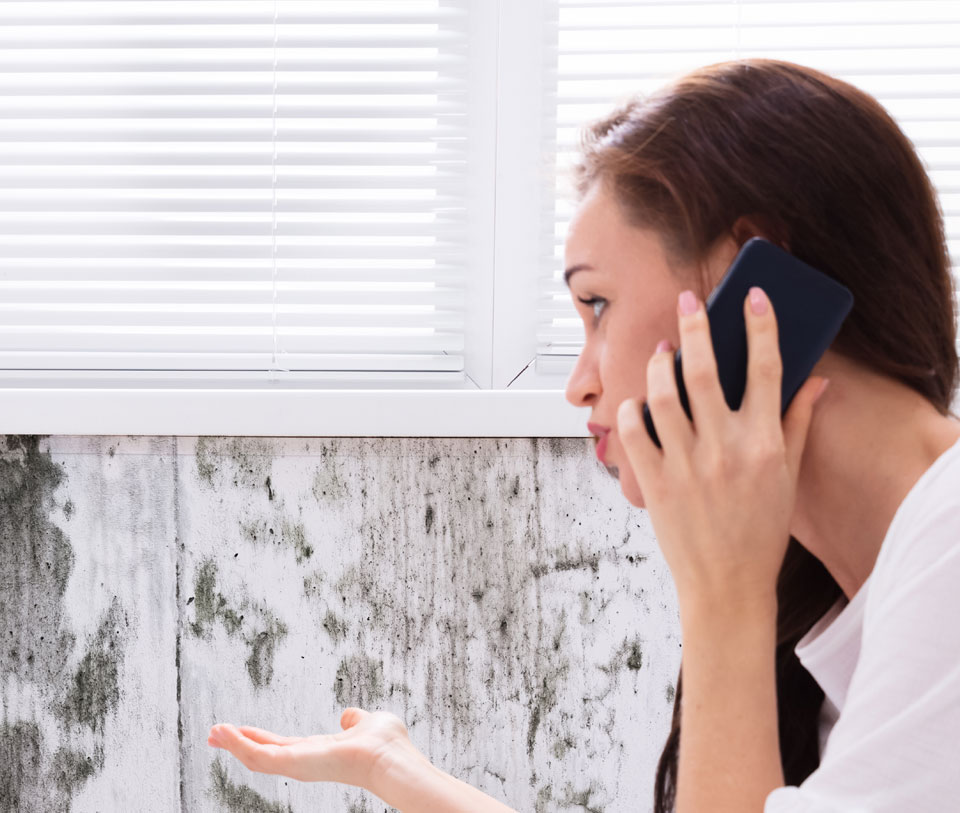
What Is Basement Mold Removal?
Basement mold removal is the containment and removal of mold growth from basement walls, floors, framing and finished materials, combined with correcting the seepage, leaks or humidity that caused it. Because basements sit below grade, moisture control is half the job.
Why Basements Grow Mold
- Foundation walls and slabs wick ground moisture
- Past flooding or sump pump failures left materials wet
- Summer humidity condenses on cool concrete and ducts
- Finished walls trap moisture against the foundation
- Carpet on concrete stays damp underneath
It is the most common job within our mold remediation service, and it always starts by finding where the basement moisture comes from.
Many Wood Dale homes have had at least one basement water event. See why basements flood in DuPage County.
Mold vs. Efflorescence: What’s on Your Basement Wall?
White, chalky deposits on concrete are often efflorescence, mineral salts left when water evaporates through masonry. Efflorescence dissolves in water and crumbles to powder; mold is fuzzy or slimy, smells musty and grows on organic materials like wood and drywall paper. Efflorescence is not mold, but it signals moisture moving through the wall.
Our Basement Mold Removal Process
- Inspect and moisture-map walls, floors, framing and ductwork.
- Set containment and negative air with HEPA filtration.
- Remove moldy drywall, insulation, carpet and pad.
- HEPA-vacuum and clean framing, joists and concrete; sand or blast where needed.
- Apply antimicrobial treatment and, when appropriate, mold-resistant coatings.
- Dry the space and set long-term dehumidification.
- Recommend or coordinate seepage fixes: grading, downspouts, sump or drain tile.
- Rebuild with mold-resistant materials through our reconstruction team.
How to Prevent Basement Mold
- Keep basement humidity below 50% with a properly sized dehumidifier.
- Dry any basement water within 24 to 48 hours.
- Use mold-resistant drywall and leave a gap between the slab and drywall.
- Avoid wall-to-wall carpet directly on concrete.
- Maintain your sump pump and gutters.
Basement Mold After Flooding
After a basement flood, mold can grow on wet drywall paper, carpet backing and wood within 24 to 48 hours. When a flood was cleaned up without professional drying, we often find growth behind finished walls months later: on the back of the drywall, on the bottom plate of the framing and under carpet pad. A moisture and mold check is worth doing after any basement water event.
Where We Find Basement Mold Most Often
| Location | Why it grows there |
|---|---|
| Behind finished drywall on exterior walls | Foundation moisture trapped by the wall |
| Bottom of wood framing on the slab | Wicking from concrete |
| Under carpet and pad | Damp concrete, no airflow |
| Around the sump pit | Constant moisture and humidity |
| Storage boxes on the floor | Cardboard absorbs moisture |
| Ductwork and HVAC in the basement | Condensation on cold surfaces |
Dehumidifier Sizing for Basements
Basements in the Chicago area often reach high humidity in summer. A dehumidifier sized for the space, set to 45% to 50%, and drained to a floor drain or pump runs without daily emptying. Small units in large basements run constantly and still fall short. We recommend sizing based on square footage and how damp the space is.
Rebuilding a Basement to Resist Mold
- Leave a half-inch gap between the slab and new drywall
- Use mold-resistant drywall and pressure-treated bottom plates
- Insulate foundation walls with rigid foam instead of fiberglass against concrete
- Choose luxury vinyl plank or tile instead of wall-to-wall carpet
How Long Basement Mold Removal Takes
Most basement mold removal projects take 1 to 3 days for removal and cleaning, plus drying time if materials are still damp. Rebuilding finished walls and flooring adds several days to a few weeks.
Regular checks of corners, the sump area and stored boxes each season catch new growth early, while it is still small and simple to remove.
Areas We Serve
We respond from Wood Dale to homes and businesses across DuPage and northwest Cook County, including:
Basement Mold Removal FAQs
Is basement mold dangerous?
Basement mold can trigger allergy and asthma symptoms and spreads spores through the home via HVAC returns. Any growth larger than a small patch should be removed with containment.
Should I bleach mold on basement walls?
Bleach is not recommended for porous materials such as drywall and wood because it does not reach roots below the surface. Professional removal physically removes or cleans the growth.
Why does my basement smell musty with no visible mold?
A musty smell usually means mold or bacteria growing behind finished walls, under carpet or in the HVAC system. A mold inspection can find the source.